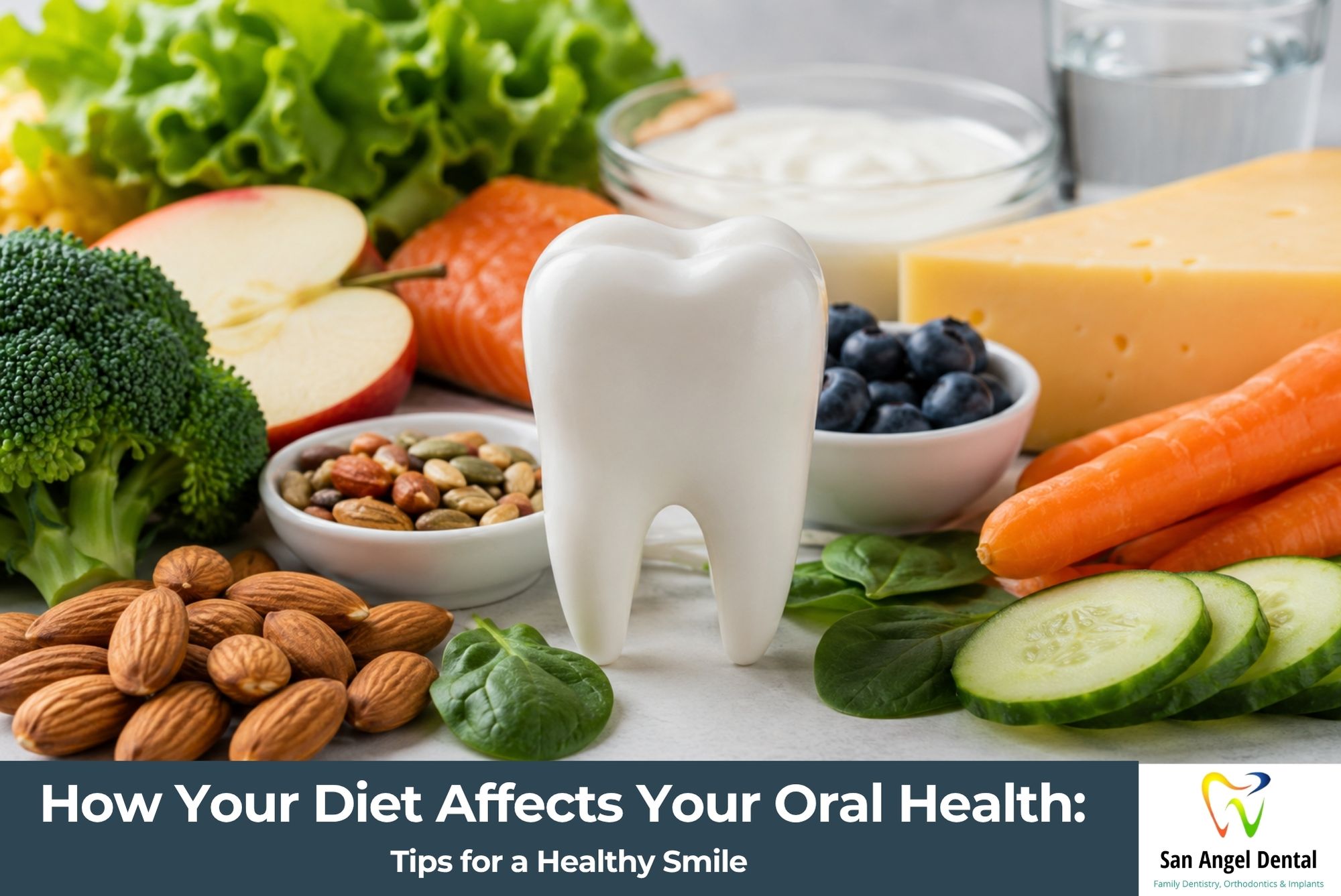
 Your smile is one of your greatest assets, and maintaining healthy teeth and gums involves much more than brushing and flossing. What you eat every day has a direct impact on your oral health. The foods and beverages you consume can either strengthen your teeth and gums or contribute to cavities, gum disease, enamel erosion, and bad breath.
At San Angel Dental, we believe that prevention starts with education. Understanding how your diet influences your oral health empowers you to make healthier choices that protect your smile for years to come. Whether you’re looking to prevent tooth decay or improve your overall dental wellness, these dietary tips can make a significant difference.
The Connection Between Nutrition and Oral Health
Your mouth is the first stop in the digestive process, making it the first place your food affects your body. Every bite you take can either nourish your teeth or feed harmful bacteria that cause dental problems.
When sugars and carbohydrates remain on your teeth, bacteria feed on them and produce acids that attack tooth enamel. Over time, these acid attacks can lead to cavities, enamel erosion, and increased tooth sensitivity.
On the other hand, nutrient-rich foods provide the vitamins and minerals your teeth and gums need to stay strong and healthy.
Foods That Promote a Healthy Smile
Dairy Products
Milk, cheese, and yogurt are excellent sources of calcium and phosphorus, two minerals essential for maintaining strong tooth enamel. Cheese also stimulates saliva production, helping wash away food particles and neutralize harmful acids.
Crunchy Fruits and Vegetables
Apples, carrots, celery, and cucumbers naturally help clean teeth while stimulating saliva production. Saliva acts as your mouth’s natural defense system by rinsing away bacteria and food debris.
Leafy Green Vegetables
Spinach, kale, broccoli, and other leafy greens contain calcium, folic acid, and important vitamins that support healthy gums and strong teeth.
Lean Proteins
Chicken, turkey, fish, eggs, and lean meats provide phosphorus and protein that help strengthen tooth enamel and repair tissues.
Nuts and Seeds
Almonds, walnuts, and sunflower seeds contain healthy fats, calcium, magnesium, and phosphorus that contribute to healthy teeth.
Water
Water is one of the healthiest beverages for your mouth. Drinking fluoridated water helps rinse away bacteria, maintain moisture, and strengthen enamel.
Foods and Drinks That Can Harm Your Teeth
Sugary Foods
Candy, cookies, cakes, pastries, and sugary cereals feed cavity-causing bacteria. Frequent snacking on sweets increases the amount of time your teeth are exposed to harmful acids.
Sugary Drinks
Soft drinks, sports drinks, sweetened teas, energy drinks, and fruit juices often contain high amounts of sugar and acids that accelerate tooth decay.
Sticky Foods
Dried fruits, caramel, gummy candies, and other sticky snacks cling to teeth longer, making them difficult to remove through saliva alone.
Acidic Foods and Beverages
Citrus fruits, tomatoes, vinegar-based dressings, soda, wine, and energy drinks can gradually wear away enamel when consumed excessively.
Starchy Snacks
Potato chips, crackers, white bread, and similar processed carbohydrates break down into sugars and often become trapped between teeth.
Vitamins and Minerals Your Teeth Need
Calcium
Calcium helps build and maintain strong teeth and jawbones.
Sources include:
- Milk
- Cheese
- Yogurt
- Almonds
- Broccoli
Vitamin D
Vitamin D improves calcium absorption and supports healthy bone development.
Sources include:
- Fatty fish
- Eggs
- Fortified dairy products
- Safe sun exposure
Phosphorus
Phosphorus works together with calcium to protect tooth enamel.
Sources include:
- Fish
- Poultry
- Eggs
- Dairy
- Beans
Vitamin C
Healthy gums rely on Vitamin C for collagen production and tissue repair.
Sources include:
- Strawberries
- Bell peppers
- Oranges
- Kiwi
- Broccoli
Smart Eating Habits for Better Oral Health
Good nutrition isn’t just about what you eat—it’s also about how often you eat.
Limit Frequent Snacking
Each snack creates another acid attack on your teeth. Limiting snacks gives your saliva time to neutralize acids and repair enamel.
Rinse with Water
After eating sugary or acidic foods, rinse your mouth with water to help reduce acid levels.
Wait Before Brushing
After consuming acidic beverages, wait about 30 minutes before brushing. Brushing immediately may spread acid across softened enamel.
Choose Tooth-Friendly Snacks
Healthy snack options include:
- Cheese
- Plain yogurt
- Raw vegetables
- Apples
- Nuts
Avoid Late-Night Sugary Snacks
Saliva production decreases while you sleep, allowing bacteria to remain active longer if sugar is left on your teeth overnight.
Don’t Forget Daily Oral Hygiene
Even the healthiest diet cannot replace proper oral care.
Maintain your smile by:
- Brushing twice daily with fluoride toothpaste
- Flossing every day
- Drinking plenty of water
- Replacing your toothbrush every three to four months
- Visiting your dentist every six months for professional cleanings and examinations
Regular Dental Visits Matter
Diet is only one piece of maintaining excellent oral health. Routine dental visits allow dentists to identify cavities, gum disease, enamel wear, and other concerns before they become major problems.
Professional cleanings remove plaque and tartar that brushing alone cannot eliminate, helping preserve your smile for years to come.
At San Angel Dental, our experienced dental team provides comprehensive preventive care, cosmetic dentistry, restorative treatments, and family dental services designed to keep your smile healthy and beautiful.
Whether you’re due for a routine checkup or have questions about improving your oral health, we’re here to help.
Frequently Asked Questions (Q&A)
How does sugar cause cavities?
Sugar feeds bacteria naturally present in your mouth. These bacteria produce acids that weaken tooth enamel, eventually causing cavities if left untreated.
Is fruit bad for your teeth?
Whole fruits are generally healthy because they provide fiber, vitamins, and water. However, fruits still contain natural sugars, so it’s important to brush regularly and avoid excessive fruit juice consumption.
Does drinking water help protect teeth?
Yes. Water rinses away food particles and bacteria while helping maintain saliva production. Fluoridated water also strengthens enamel and reduces cavity risk.
Which foods naturally clean your teeth?
Crunchy fruits and vegetables like apples, celery, carrots, and cucumbers help stimulate saliva and gently remove plaque from tooth surfaces.
Can diet affect gum disease?
Absolutely. Diets lacking essential nutrients can weaken the immune system and make gums more susceptible to inflammation and infection. Vitamin C is especially important for healthy gums.
Are sports drinks bad for teeth?
Many sports drinks contain high levels of sugar and acid, which can contribute to enamel erosion and tooth decay when consumed frequently.
Is cheese actually good for teeth?
Yes. Cheese contains calcium and phosphorus while increasing saliva production, making it one of the most tooth-friendly snacks available.
How often should I visit the dentist?
Most patients benefit from professional dental exams and cleanings every six months. Some individuals with gum disease or other oral health concerns may require more frequent visits.
What should I do after drinking coffee or soda?
Drink water afterward to help rinse away acids and staining compounds. Avoid brushing immediately after acidic beverages—wait about 30 minutes before brushing.
Can San Angel Dental help improve my oral health?
Absolutely. Our experienced dental team offers preventive care, cleanings, exams, restorative dentistry, cosmetic treatments, and personalized guidance to help you maintain a healthy smile for life.


