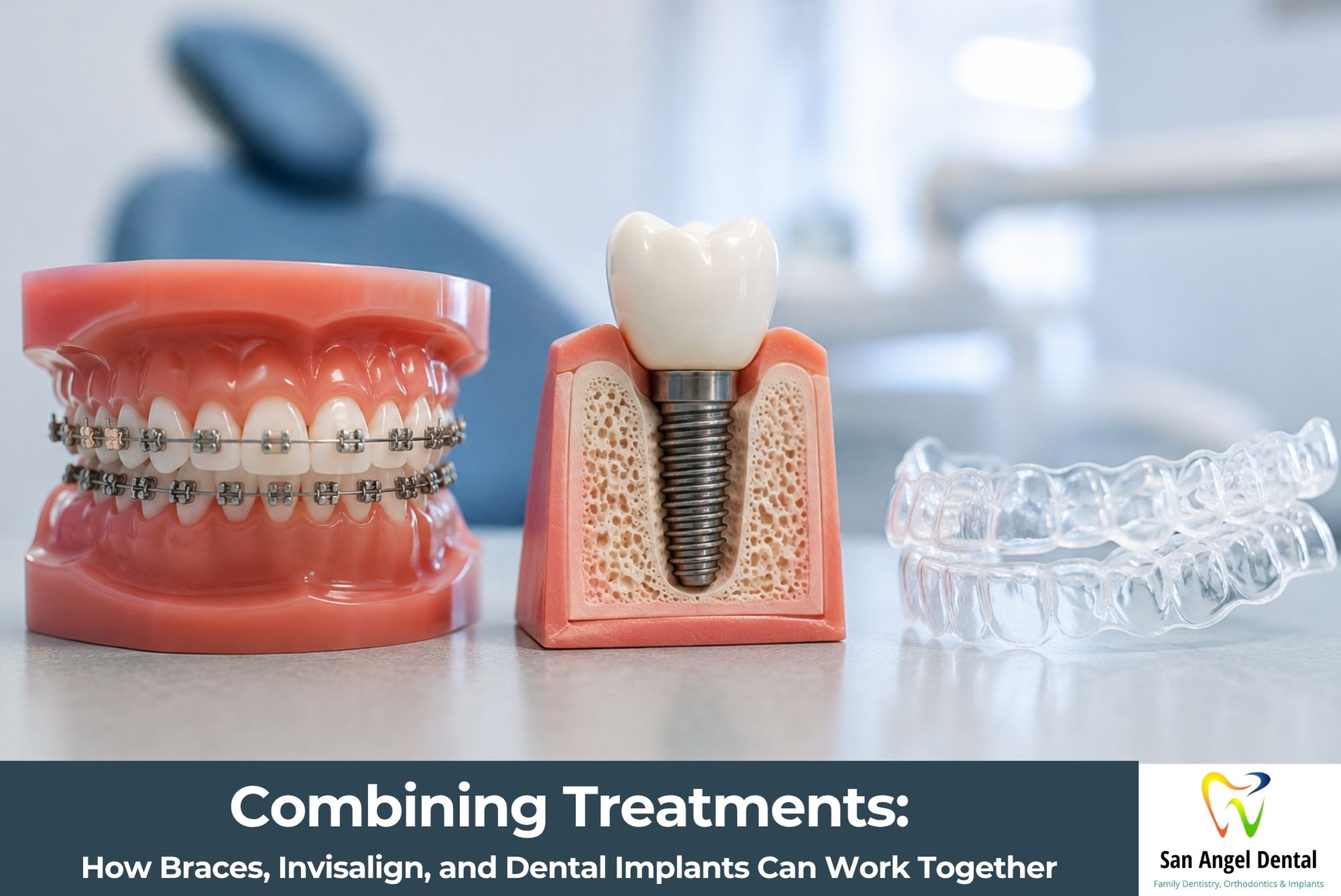
 Many people believe they must choose between orthodontic treatment and dental implants, but modern dentistry offers a more comprehensive approach. In many cases, braces, Invisalign®, and dental implants can work together as part of a personalized treatment plan that restores both the appearance and function of your smile.
At San Angel Dental, we believe every smile is unique. Whether you’re dealing with missing teeth, crooked teeth, bite alignment issues, or all of the above, our experienced dental team develops customized treatment plans designed to achieve long-lasting, beautiful results.
If you’ve been wondering whether it’s possible to combine orthodontics with dental implants, here’s everything you need to know.
Why Combining Dental Treatments Matters
A healthy smile isn’t just about straight teeth. Proper tooth alignment, healthy gums, strong bone support, and replacing missing teeth all contribute to your overall oral health.
By combining multiple treatments, patients can often:
- Improve bite function
- Restore missing teeth
- Prevent future dental complications
- Improve speech
- Make brushing and flossing easier
- Achieve a more balanced facial appearance
- Enjoy a more confident smile
Instead of treating one issue at a time, comprehensive treatment planning addresses the entire smile.
Understanding Braces
Traditional braces use brackets and wires to gradually move teeth into their proper positions.
Braces are often recommended for patients with:
- Crowded teeth
- Severe misalignment
- Large gaps
- Bite problems
- Rotated teeth
- Complex orthodontic cases
Modern braces are more comfortable and efficient than ever before, making them an excellent option for patients of all ages.
Understanding Invisalign®
Invisalign uses a series of custom-made clear aligners that gently shift teeth over time.
Benefits of Invisalign include:
- Nearly invisible appearance
- Removable for eating
- Easier brushing and flossing
- Comfortable fit
- No metal brackets or wires
- Fewer dietary restrictions
For many adults and teens with mild to moderate orthodontic concerns, Invisalign provides an excellent alternative to traditional braces.
Understanding Dental Implants
Dental implants replace missing tooth roots with titanium posts that are surgically placed into the jawbone. After healing, a custom dental crown is attached, creating a natural-looking replacement tooth.
Dental implants offer many benefits:
- Permanent tooth replacement
- Natural appearance
- Strong chewing ability
- Prevention of bone loss
- Protection of surrounding teeth
- Long-lasting durability
Dental implants are widely considered the gold standard for replacing missing teeth.
Can Braces, Invisalign, and Dental Implants Be Combined?
Yes—but careful planning is essential.
The order of treatment depends on each patient’s oral health, tooth position, and long-term goals.
In many situations, orthodontic treatment is completed before implant placement because implants cannot move like natural teeth.
Why Teeth Are Usually Straightened Before Implants
Natural teeth are supported by ligaments that allow orthodontic movement.
Dental implants become permanently fused to the jawbone through a process called osseointegration. Once placed, implants remain fixed and cannot be repositioned with braces or Invisalign.
This is why dentists often recommend:
- Straighten natural teeth
- Create proper spacing
- Correct bite alignment
- Place dental implant(s)
- Restore the implant with a custom crown
This sequence helps produce the most predictable and aesthetically pleasing results.
When Implants May Be Placed First
There are situations where implants may already be present before orthodontic treatment begins.
Depending on the case, orthodontic treatment can often still be completed around existing implants. Since implants remain stationary, your dentist and orthodontic provider will carefully plan tooth movement around them.
Advanced treatment planning allows many patients to successfully combine both procedures.
Benefits of Combining Orthodontics and Dental Implants
Better Long-Term Oral Health
Straight teeth are easier to clean, reducing the risk of cavities and gum disease.
Improved Bite Function
Proper alignment distributes chewing forces evenly across your teeth.
Better Implant Placement
Orthodontic treatment creates ideal spacing for implants, improving both function and appearance.
Enhanced Smile Aesthetics
Combining treatments produces a more balanced, natural-looking smile.
Greater Confidence
Patients often report improved self-esteem after completing comprehensive smile restoration.
Who Is a Good Candidate?
You may benefit from combining braces, Invisalign, and implants if you have:
- Missing teeth
- Crooked teeth
- Bite problems
- Crowding
- Gaps
- Teeth that shifted after tooth loss
- Difficulty chewing
- Cosmetic concerns
A comprehensive examination allows your dentist to determine the best treatment sequence.
What Is the Treatment Timeline?
Every patient is different, but treatment often follows this general schedule:
Step 1: Comprehensive Examination
Digital X-rays, Intaroral Scan, photographs, and treatment planning.
Step 2: Orthodontic Treatment
Braces or Invisalign gradually move teeth into proper position.
Step 3: Implant Placement
Once alignment is complete, dental implants are placed where needed.
Step 4: Healing Period
The implant integrates with the jawbone over several months.
Step 5: Final Restoration
Custom crowns complete your smile.
While treatment may take several months to over a year depending on complexity, the long-term benefits make the investment worthwhile.
Why Comprehensive Treatment Planning Matters
Successful smile restoration requires more than individual procedures.
At San Angel Dental, we evaluate:
- Tooth alignment
- Jawbone health
- Gum condition
- Bite relationship
- Missing teeth
- Facial symmetry
- Long-term oral health goals
This comprehensive approach allows us to create customized treatment plans that prioritize both function and aesthetics.
Frequently Asked Questions
Can I get Invisalign if I’m missing teeth?
Yes. Invisalign can often be used to reposition your remaining teeth before dental implant placement.
Should I get braces before implants?
In many cases, yes. Since implants cannot move after placement, orthodontic treatment is often completed first to create ideal spacing.
Can braces move dental implants?
No. Dental implants are permanently fused to the jawbone and do not move with orthodontic treatment.
Am I too old for braces or Invisalign?
Absolutely not. Adults of all ages can successfully straighten their teeth with braces or Invisalign.
How long do dental implants last?
With proper care and regular dental visits, dental implants can last for many years and often decades.
Will insurance cover combined treatment?
Coverage varies depending on your dental insurance plan. Our team can review your benefits and discuss financing options to help make treatment affordable.
Is Invisalign as effective as braces?
For many mild to moderate orthodontic cases, Invisalign is highly effective. More complex cases may benefit from traditional braces.
Does getting a dental implant hurt?
Local anesthesia and modern techniques help make the procedure comfortable.
How do I know which treatment is right for me?
A comprehensive consultation is the best way to determine whether braces, Invisalign, dental implants, or a combination of treatments will provide the best outcome for your smile.
Trust San Angel Dental for Comprehensive Smile Care
Whether you need orthodontic treatment, dental implants, or a complete smile makeover, the experienced team at San Angel Dental is committed to providing personalized care using modern techniques and advanced technology.
Our goal is to help every patient achieve a healthy, functional, and confident smile through customized treatment planning and compassionate care.
Schedule a consultation today to learn how braces, Invisalign, and dental implants can work together to transform your smile.


