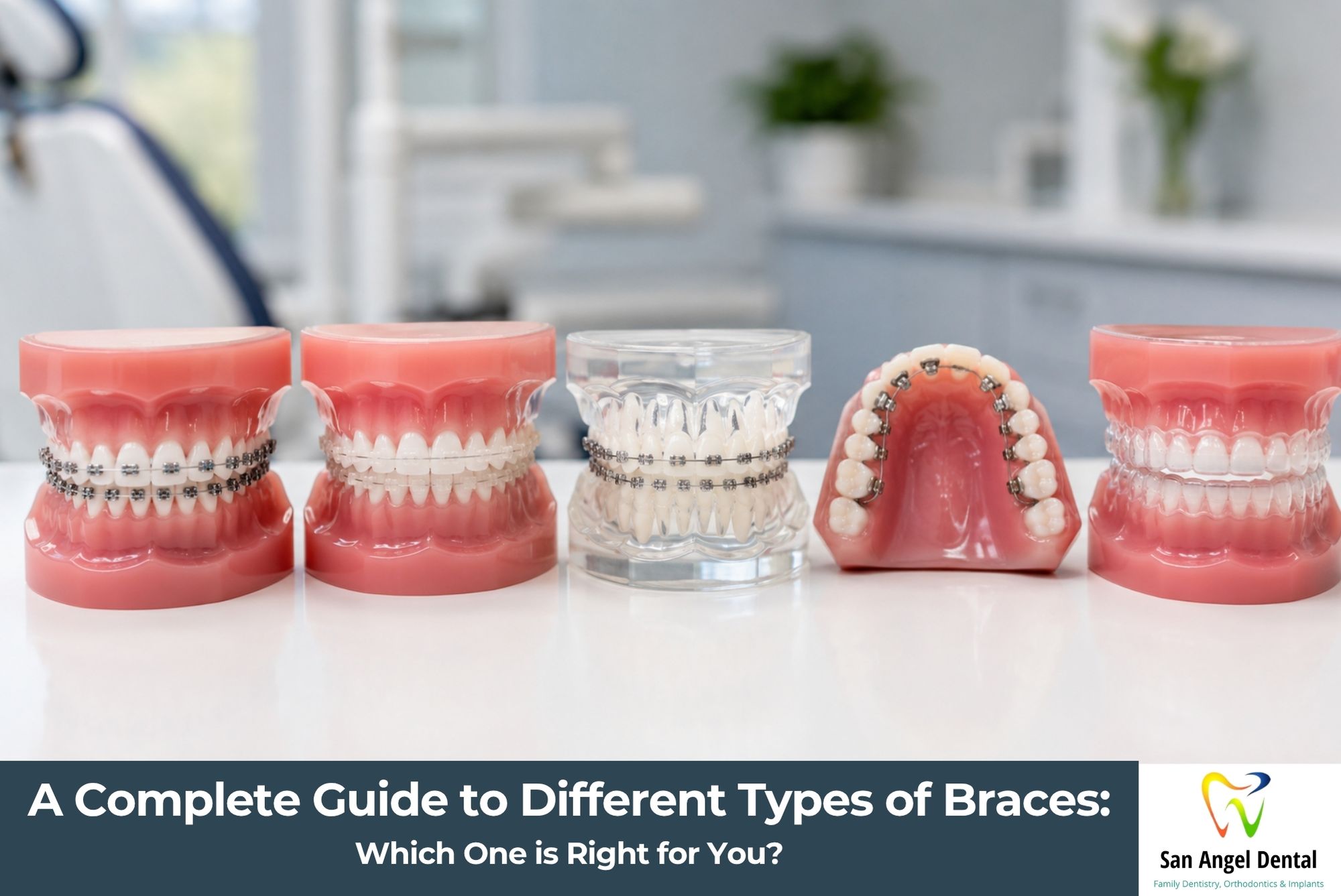
 Orthodontic treatment has come a long way over the years. Today’s patients have more options than ever before, making it easier to achieve a straighter, healthier smile while fitting their lifestyle, budget, and personal preferences. Whether you’re considering braces for yourself or your child, understanding the different types available is the first step toward making an informed decision.
At San Angel Dental, we believe every patient deserves a customized treatment plan designed around their unique smile goals. Our experienced dental team proudly provides comprehensive orthodontic evaluations and personalized care to patients throughout Anaheim and Buena Park, California.
In this complete guide, we’ll explain the different types of braces, their advantages and disadvantages, who they’re best suited for, and how to determine which option is right for you.
Why Straight Teeth Matter
Many people think braces are only for improving appearance. While a straighter smile certainly boosts confidence, orthodontic treatment offers numerous oral health benefits as well.
Properly aligned teeth can:
- Improve bite function
- Make brushing and flossing easier
- Reduce the risk of tooth decay
- Lower the chances of gum disease
- Prevent uneven tooth wear
- Minimize jaw discomfort
- Improve speech in some cases
- Reduce the risk of chipped or broken teeth
Orthodontic treatment is truly an investment in both your appearance and your long-term oral health.
Traditional Metal Braces
Traditional metal braces remain the most common orthodontic treatment worldwide—and for good reason.
They consist of:
- Metal brackets attached to each tooth
- A metal archwire connecting the brackets
- Elastic bands that help guide tooth movement
Today’s metal braces are much smaller, smoother, and more comfortable than those used decades ago.
Advantages
- Most effective for complex orthodontic cases
- Generally the most affordable option
- Highly durable
- Suitable for children, teens, and adults
- Consistently delivers excellent results
Considerations
- Most visible option
- Food restrictions apply
- Requires careful brushing and flossing
Traditional braces are ideal for patients with significant crowding, bite problems, rotated teeth, or severe alignment issues.
Ceramic Braces
Ceramic braces work similarly to traditional metal braces but feature tooth-colored or clear brackets that blend with natural teeth.
Many adults and older teens choose ceramic braces because they provide a more discreet appearance.
Advantages
- Less noticeable than metal braces
- Highly effective
- Suitable for moderate to complex cases
- Attractive cosmetic appearance
Considerations
- Slightly more expensive
- Brackets may stain without proper care
- Can be more fragile than metal braces
Ceramic braces offer an excellent balance between aesthetics and effectiveness.
Self-Ligating Braces
Self-ligating braces use specialized brackets with built-in clips instead of elastic bands.
These clips allow the wire to move more freely throughout treatment.
Advantages
- Fewer orthodontic adjustments
- Less friction
- Easier cleaning
- Potentially shorter appointments
- Improved comfort for many patients
Considerations
- Cost may be slightly higher
- Not every case is suited for self-ligating braces
Clear Aligners
Clear aligners, such as Invisalign®, have become one of the most popular orthodontic treatments for adults and teens.
Instead of brackets and wires, patients wear a series of custom-made clear plastic trays that gradually move the teeth into proper alignment.
Advantages
- Nearly invisible
- Removable
- Comfortable
- No food restrictions
- Easier brushing and flossing
- Fewer emergency visits
Considerations
- Must be worn 20–22 hours daily
- Requires patient discipline
- May not be ideal for severe orthodontic issues
Clear aligners are excellent for patients seeking flexibility and aesthetics.
Which Braces Are Best for Children?
Children often benefit with Myofunctional appliances like The Myobrace®System
Early orthodontic evaluations can identify problems before they become more serious.
The American Association of Orthodontists recommends children receive an orthodontic evaluation by age 7.
The Myobrace®System is preventive pre-orthodontic treatment that focuses on addressing the underlying causes of crooked teeth, often without the need for braces or extraction of teeth, unlocking natural growth and development. Treatment is best suited to children aged 3 to 15 and involves using a series of removable intraoral appliances that are worn for one to two hours each day plus overnight while sleeping.FF
What Myobrace® treatment does:
- Corrects poor oral habits
- Develops & aligns the jaws
- Straightens the teeth
- Optimises facial development
- Improves overall health
- Promotes healthy eating habits
How does it do this? By helping the child:
- Breathe through the nose
- Correct tongue resting position
- Swallow correctly
- Keep the lips together
Early orthodontic evaluations can identify problems before they become more serious.
The American Association of Orthodontists recommends children receive an orthodontic evaluation by age 7.
Which Braces Are Best for Teenagers?
Teenagers have several excellent options depending on their needs.
Popular choices include:
- Traditional metal braces
- Ceramic braces
- Clear aligners like Invisalign
Treatment recommendations depend on the severity of alignment issues and lifestyle preferences.
Which Braces Are Best for Adults?
Adults increasingly seek orthodontic treatment to improve both appearance and oral health.
Many adults prefer:
- Ceramic braces
- Clear aligners
These options provide discreet treatment while fitting busy professional lifestyles.
How Long Does Orthodontic Treatment Take?
Treatment time varies depending on:
- Severity of misalignment
- Patient age
- Type of braces
- Consistency with appointments
- Oral hygiene habits
Most patients complete treatment within:
- Mild cases: 6–12 months
- Moderate cases: 12–24 months
- Complex cases: 24–36 months
Your dentist will provide a personalized estimate during your consultation.
Caring for Your Braces
Proper care helps ensure successful treatment.
Tips include:
- Brush after every meal.
- Floss daily using orthodontic flossers or water flossers.
- Avoid sticky and hard foods.
- Attend all adjustment appointments.
- Wear rubber bands exactly as instructed.
- Wear retainers after treatment to maintain results.
Excellent oral hygiene is essential throughout orthodontic treatment.
Signs You May Need Braces
You may benefit from orthodontic treatment if you have:
- Crooked teeth
- Crowded teeth
- Gaps between teeth
- Overbite
- Underbite
- Crossbite
- Open bite
- Difficulty chewing
- Jaw discomfort
- Frequent biting of cheeks or lips
A professional evaluation is the best way to determine the right treatment.
Why Choose San Angel Dental for Orthodontic Care?
At San Angel Dental, we understand that every smile is unique.
Our compassionate team provides personalized orthodontic evaluations and works closely with each patient to recommend the treatment option that best fits their oral health needs, lifestyle, and budget.
When you choose San Angel Dental, you can expect:
- Comprehensive orthodontic consultations
- Personalized treatment plans
- Modern dental technology
- Friendly and experienced dental professionals
- Comfortable, patient-focused care
- Convenient Anaheim and Buena Park locations
We’re committed to helping patients of all ages achieve beautiful, healthy smiles they’ll enjoy for years to come.
Frequently Asked Questions (Q&A)
What age is best for braces?
While children should have an orthodontic evaluation by age 7, braces can be effective for patients of almost any age. Many adults successfully improve their smiles with orthodontic treatment.
Are braces painful?
You may experience mild soreness for a few days after braces are placed or adjusted, but this typically subsides quickly and can usually be managed with over-the-counter pain relief if needed.
How long will I need to wear braces?
Most treatments last between 12 and 24 months, although some cases may be shorter or longer depending on your orthodontic needs.
Are clear aligners as effective as braces?
Clear aligners are highly effective for many mild to moderate orthodontic cases. More complex bite or alignment issues may still require traditional braces.
Can adults get braces?
Absolutely. Orthodontic treatment is becoming increasingly popular among adults seeking healthier, straighter and functional smiles.
What foods should I avoid with braces?
Avoid hard candies, popcorn, chewing gum, caramel, sticky candies, ice, and foods that could damage brackets or wires.
Will braces affect my speech?
Most patients adjust within a few days. Lingual braces may require a slightly longer adjustment period because they are placed behind the teeth.
How often will I need appointments?
Most orthodontic patients visit every 4 to 8 weeks for adjustments and progress checks.
Do I need to wear a retainer after braces?
Yes. Wearing your retainer as instructed helps maintain your new smile and prevents teeth from shifting back.
How do I know which braces are right for me?
The best option depends on your orthodontic needs, lifestyle, cosmetic preferences, and budget. A professional consultation at San Angel Dental can help determine the ideal treatment for your smile.
Schedule Your Orthodontic Consultation Today
If you’re considering braces or clear aligners, the experienced team at San Angel Dental is here to help. We’ll evaluate your smile, discuss your treatment options, and create a personalized orthodontic plan designed to help you achieve lasting oral health and confidence.
Whether you’re exploring braces for your child, teen, or yourself, we’re committed to providing exceptional dental care in a welcoming and comfortable environment.


